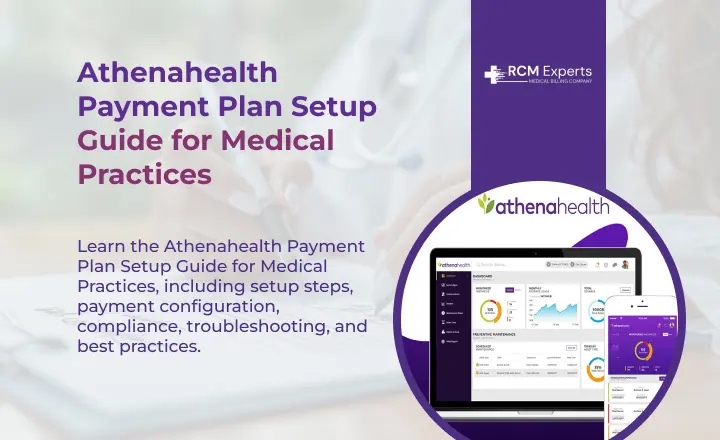
Medical billing mistakes and claim denials result in considerable revenue losses for healthcare providers. According to the MGMA analysis, claim denials cost an average of $25 to rework, with some costing up to $118. The AMA states that 7-10% of claims are refused on the first try. In 2022, US hospitals saw a 67% rise in refused claims compared to five years before. How may Athena Health help healthcare providers minimize errors and increase claim approval rates?
Athena Health’s billing technology streamlines claim submissions, reducing denial rates by up to 32% with automatic pre-submission changes. However, problems in provider credentialing, outdated billing codes, and insufficient documentation continue to lead to rejections. Nearly 90% of denied claims are preventable, underlining the need for proactive management.
This article discusses key billing phases, typical problems, and recommended practices for enhancing accuracy, which will help healthcare providers and revenue cycle workers avoid claim denials and financial losses.
Understanding Athena Health’s Billing Process
A detailed grasp of Athena Health’s billing process is critical for lowering claim rejections and increasing reimbursement rates. This section describes the essential components of the billing procedure.
Key Components of Athena Health’s Billing Workflow
A standardized billing procedure at Athena Health promotes correct claim submission, avoiding mistakes and denials.
1. Patient Registration and Insurance Verification
Accurate patient information and insurance data are essential for successful claim filing. Errors during this stage might result in claim denials and payment delays.
- Collect and verify patient demographics and insurance information at each appointment.
- Use Athena Health’s insurance verification tools to check coverage and benefits in real-time.
.
2. Medical Coding and Documentation
Proper coding and sufficient documentation are required for claim approval. Incorrect or incomplete codes might lead to rejections.
- Ensure that clinical documentation supports the given codes.
- Update coding processes regularly to ensure compliance with current standards and recommendations.
3. Claim Submission and Tracking
Claims submitted on time and tracked closely help to maintain cash flow and identify problems early.
- Submit your claims as soon as possible after receiving the services.
- Use Athena Health’s tracking capabilities to stay updated on claim progress and respond quickly to any holds or denials.
4. Denial Management and Appeals
Effectively handling denials and pursuing appeals as needed can help recover money that would otherwise be lost.
- Analyze denial reasons to uncover trends and take appropriate action.
- Create a uniform process for appealing disallowed claims, including timely resubmission with appropriate modifications.
Strategies to Reduce Claim Denials in Athena Health
Reducing claim denials is critical for preserving financial health in healthcare operations. Athena Health provides tools to help with this process, but proper application is essential for attaining the best results.
Implementing Proactive Eligibility Verification
Ensuring patient insurance eligibility before providing services will help to avoid multiple claim denials.
- Verify patient insurance coverage before service.
- Use Athena Health’s real-time eligibility verification.
- Confirm policy details to avoid claim rejections.
Ensuring Accurate and Complete Documentation
Complete and exact documentation facilitates accurate coding and billing. Use Athena Health’s documentation tools to gather all relevant patient information,
- Collect the essential patient information.
- Use Athena Health’s documentation tools to ensure correctness.
- Maintain detailed records to avoid rejections.
Regularly Updating Coding Practices
Compliance with code standards is crucial. The Athena Health system provides updates on code changes, which your team examines and implements as quickly as possible to ensure compliance and accuracy.
- Keep up with current coding standards.
- Review the Athena Health coding updates regularly.
- To avoid claim issues, ensure that you choose the correct code.
Utilizing Athena Health’s Denial Management Tools
Athena Health provides capabilities that help detect and resolve claim concerns before they are submitted. Implement these techniques to prevent future denials, streamline the settlement process, and increase cash flow.
- Before submitting a claim, identify any inaccuracies.
- Use Athena Health’s built-in denial tracking features.
- Actively address claim concerns to enhance reimbursement rates.
Enhancing Claim Accuracy with Athena Health
Accurate claim-making is critical for prompt reimbursement and fewer rejections. Athena Health offers enhanced technologies to increase claim accuracy and efficiency. Implementing best practices for verification, coding, and auditing can assist in avoiding costly errors.
Verifying Patient Information Before Submission
Ensuring accurate patient information before submitting a claim helps prevent typical mistakes that lead to rejections. Missing or erroneous demographic and insurance data might cause payment delays and time-consuming resubmissions.
- Confirm the patient’s demographics and insurance information.
- Use Athena Health’s real-time eligibility verification.
- Correct inaccuracies before submitting a claim to avoid rejections.
H3: Using Automated Coding and Compliance Checks
Incorrect coding is a primary cause of claim denials. Athena Health provides automated tools to ensure that submitted claims meet payer-specific requirements. These tools assist in identifying anomalies and ensuring correctness before submission.
- Use Athena Health’s built-in code validation tools.
- Ensure that the CPT, ICD-10, and HCPCS codes match the paperwork.
- Prevent claim rejections by following payer-specific guidelines.
Implementing Regular Claim Audits
Frequent audits help identify and correct billing problems before they reach the payer. Athena Health’s reporting tools enable billing teams to examine trends, identify anomalies, and adjust procedures to increase claim accuracy.
- Before the start of submission, review claims to detect common mistakes.
- Use Athena Health’s reporting tools to monitor claim accuracy.
- Respond quickly to reoccurring coding or documentation issues.
Using Athena Health’s AI-Driven Claims Edits
Athena Health’s automated claim adjustments include pre-submission checks to identify errors. These modifications help to save administrative labor and enhance first-pass claim acceptance rates, resulting in speedier reimbursements.
- Detect probable claim problems with AI-powered revisions.
- Before submitting your claim, resolve any concerns that have been noted.
- Automation of adjustments reduces administrative burden.
Conclusion
Optimizing claim submissions with Athena Health reduces denials, increases reimbursement rates, and decreases administrative effort. Accurate patient data, appropriate coding, and proactive eligibility verification are critical for reducing mistakes. Using Athena Health’s AI-driven tools and rejection management capabilities improves claim accuracy. Regular audits and employee training improve compliance with changing payer requirements. Applying these tactics enables healthcare providers to minimize revenue cycles and decrease financial losses. A data-driven approach to claim management is critical for preserving efficiency and increasing income.
FAQs
1. How does Athena Health help reduce claim denials?
Athena Health automates pre-submission edits, verifies insurance in real time, and provides AI-driven claim adjustments to minimize errors and rejections.
2. What are the common causes of claim denials in Athena Health?
Denials often result from incorrect patient information, outdated billing codes, missing documentation, and eligibility verification issues.
3. How can healthcare providers improve claim accuracy with Athena Health?
Providers should verify patient data, use automated coding checks, conduct regular audits, and leverage Athena Health’s AI-driven claim edits.
4. What role does AI play in Athena Health’s billing process?
AI detects coding errors, suggests corrections before submission, and improves first-pass claim acceptance rates, reducing administrative work.
5. How can providers optimize denial management in Athena Health?
Providers should track denial trends, address root causes, and use Athena Health’s automated denial tracking and appeal management tools.