Claim denials are the main source of revenue loss in healthcare. According to the Medical Group Management Association (MGMA), the average expense for reworking a refused claim is $25, with 65% of denials never resubmitted. Even with connected platforms like Athenahealth, claim denials are still prevalent due to human mistakes, poor documentation, and payer-specific requirements.
According to recent benchmarking data, refusal rates across EHR systems range from 5 to 10 percent, with Athenahealth finding similar patterns for outpatient offices and multi-specialty groups. These unwarranted denials have first-pass resolution rates, which are supposed to be greater than 90%. If left, they increase days in A/R and slow reimbursement times.
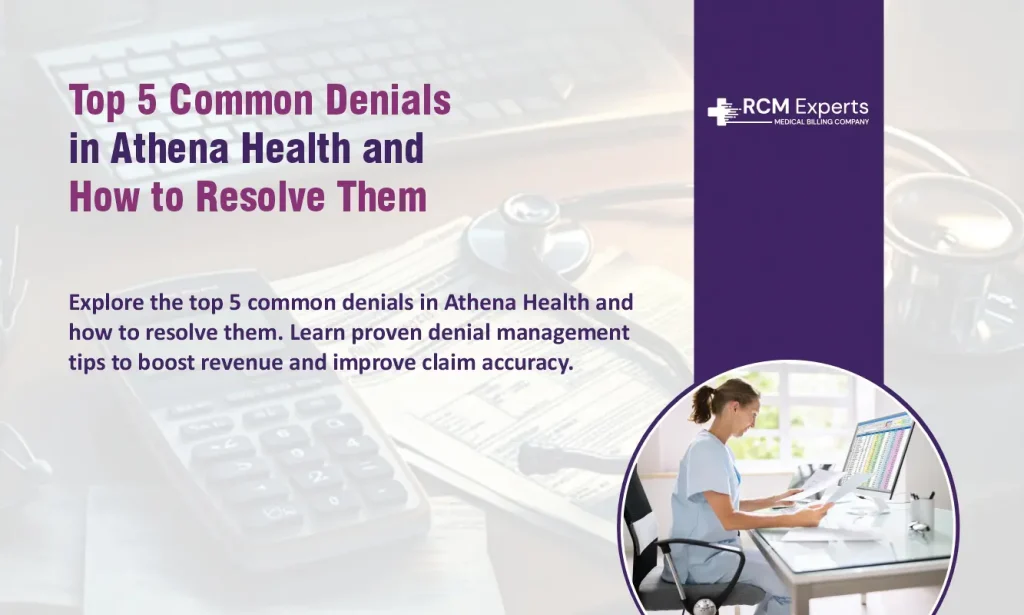
This article explains the top five most common Athena Health denials and offers practical solutions to address them. Understanding and resolving these challenges is crucial for maintaining stable revenue and compliance performance, whether you’re a billing professional working in claim edit queues or a vendor managing paperwork.
Why Understanding Athenahealth Denials Is Crucial?
Understanding the causes of all claim denials in Athena Health is critical for healthcare professionals seeking to enhance revenue cycle management. Recognizing these denials enables targeted adjustments in billing methods, leading to better financial results.
Impact on Revenue Cycle Management
Rejections interrupt the revenue cycle by delaying payments and increasing administrative costs. Addressing the root causes of these rejections could significantly enhance billing operations and save time spent on claim processing.
Healthcare practices that do not frequently review and manage rejections can experience payment delays, and affect cash flow. This can eventually create financial pressure, particularly in practices that rely significantly on insurance reimbursements. Understanding the fundamental causes of rejections, such as missing or erroneous information, eligibility concerns, or coding errors, allows providers to minimize the frequency of denials, hence improving RCM.
A successful RCM process ensures that claims are submitted accurately the first time, minimizing the need for rework. Athena Health’s rejection management technologies enable real-time tracking, allowing practices to detect claims that may be denied before they are filed. By addressing these concerns proactively, practices may maintain an ongoing source of revenue.
Benefits of Proactive Denial Handling
Proactively managing rejections results in quicker reimbursements, lower operating expenses, and higher patient satisfaction. Implementing systematic denial management techniques ensures that claims are processed effectively, and leads to fewer revenue losses.
Proactive denial management offers various benefits, including shorter reimbursement timeframes, which can be critical for cash flow security. It also eliminates administrative barriers and the stress of frequently refused claims. Healthcare practices employ staff training, automated technologies, and effective denial policies.
Furthermore, proactive handling helps practices strengthen their relationships with insurance providers by reducing the number of needless resubmissions and appeals. This can lead to more efficient discussions with payers and improved financial outcomes for the practice.
Top 5 Common Denials in Athena Health and How to Resolve Them
Identifying and addressing the most common claim denials in Athena Health may save healthcare providers significant time and money. The top five refusal codes observed frequently in Athena Health are listed below, along with suggestions for handling them.
1. Eligibility Verification Errors (Denial Code CO 27)
Eligibility verification is a key step in the claims process, and errors in this area may result in significant rejections. The CO 27 refusal code appears when insurance eligibility is not validated before providing a service. This can be caused by having outdated or incorrect insurance information on file and failing to verify eligibility before the patient’s appointment.
- Why This Happens: Eligibility verification mistakes are frequently caused by outdated insurance information, missing or incomplete patient details, and a failure to conduct real-time eligibility checks.
- How to Fix It: To address this issue, practices may employ real-time eligibility verification tools such as Athena Health to verify that insurance information is valid before providing therapies. Staff should be educated to validate insurance information during the scheduling process and at the point of service. Additionally, practitioners should urge patients to update their insurance information regularly. This guarantees that the insurance information sent to Athena Health is correct and up to date.
2. Missing or Invalid Authorization (Denial Code CO 197)
Certain services require prior authorization from the insurer to be covered; if this authorization is missing, incorrect, or expired, the claim will be declined using the CO 197 refusal number.
- Why It Happens: This rejection occurs frequently when the requisite previous authorization is not obtained before the service is provided or the authorization information is put erroneously into the system. Some insurers may also reject claims if the permission has expired or there are differences between the procedure and the authorization.
- How to Resolve It: To avoid this denial, practices should implement a system for tracking prior authorization statuses in Athena Health, including via Athena’s order tracking features, to ensure authorizations are obtained before scheduling services. Staff should also be trained to verify authorization details with payers before providing services, as many insurers now have online portals where providers can check the status of authorizations.
3. Coding Errors (Denial Code CO 96)
Denial code CO 96 is typically associated with claims containing inaccurate or invalid codes. Coding issues, such as incorrect or obsolete diagnostic and treatment codes that do not meet payer standards, are the most common causes of claim rejection.
- Why This Happens: Coding mistakes frequently arise when healthcare professionals or medical billers employ out-of-date or inaccurate ICD-10, CPT, or HCPCS codes. Additionally, there may be discrepancies between the diagnostic codes and the operations undertaken.
- How to Resolve It: To address this issue, practices should ensure that their coding team is updated on the most recent code changes and payer-specific requirements; Athena Health provides coding ideas and alerts to help prevent these errors.
4. Duplicate Claims (Denial Code CO 18)
Duplicate claims are often caused by denials in Athena Health, especially if they are resubmitted before the insurer has reviewed the initial submission. If the payer identifies duplicate claims, it issues denial code CO 18.
- Why It Happens: Duplicate claims frequently arise when providers resubmit claims too quickly or when there is doubt about the claim’s status. This could occur if there is a delay in claim processing or if the initial claim was not correctly documented in Athena Health.
- How to Resolve It: To minimize duplicate claim denials, practitioners can use Athena Health’s claim monitoring services to determine the status of their claims before resubmitting them. To claim specific services or changes, employ the necessary modifiers. Using Athena’s real-time claim status feature allows you to avoid filing claims already in progress, reducing unnecessary repetition.
5. Invalid Patient Demographics (Denial Code CO 16)
Incorrect or missing patient demographic data is another main reason for claim denial. The denial number CO 16 is issued when patient demographics are missing or conflicting with payer information.
- Why This Happens: Invalid patient demographics can be caused by data entry mistakes, discrepancies between Athena Health records and payer databases, or incomplete registration forms.
- How to Fix It: To address this issue, practices should create a comprehensive data validation procedure during patient intake. Athena Health’s system may used to alert missing or erroneous demographic data, requiring personnel to double-check patient information before completing registration. Practices should also ask patients to confirm their personal information, including insurance information, at each appointment.
Denial Prevention Tips for Athena Health Users
In Athenahealth, reducing claim denials requires more than simply reactive remedies. It all starts with identifying and resolving weak points in your business before they cause revenue loss. Here are some practical techniques to help reduce rejections and improve first-pass resolution rates.
Accurate Patient Registration and Eligibility Verification
One of the most typical billing problems with Athenahealth begins at the front desk. Claims with missing or outdated patient information are rejected before being processed.
- Always check your insurance eligibility before each appointment.
- Collect comprehensive demographic and insurance information upon check-in.
- Use Athena Health’s real-time eligibility tools to schedule and register.
Coding Consistency and Documentation Accuracy
Athenahealth claim denial codes are typically linked to contradictory or missing documents. Poor paperwork and outdated codes can directly impact claim clearance.
- Match the diagnostic and procedure codes accurately.
- Regularly update your CPT, HCPCS, and ICD-10 code sets.
- Require providers to complete clinical paperwork on time and accurately.
Clean Claim Submission Processes
Sending clean claims helps to reduce denials and the requirement for rework. Athena EHR allows for claim modifications, but they must be used properly.
- Use claim scrubber tools to detect problems before submission.
- Set up billing rules in Athena to detect missing modifiers or incorrect codes.
- Examine frequent rejection tendencies and adapt internal procedures accordingly.
Timely Follow-Up and Workflow Audits
Proactive surveillance of pending claims can help to avoid timely filing denials and delays.
- Establish internal timetables for claim filing and follow-up.
- Periodic audits of refused claims are performed to detect patterns and address core problems.
- Constantly train workers on Athenahealth denial management practices and new payer regulations.
Conclusion
Preventing rejections in Athenahealth begins with consistent protocols at every stage, from registration to claim submission. By recognizing typical problems such as eligibility mismatches, authorization gaps, and coding errors, procedures may save delays and safeguard money. Effectively applying system tools, evaluating workflows, and staying current on payer information are essential for improving claim outcomes and supporting financial success.
FAQs
1. What are the top 5 common denials in Athena Health?
Some of the most frequent denials include eligibility issues, missing authorizations, coding errors, duplicate claims, and inaccurate patient information.
2. How can I prevent eligibility verification denials in Athena Health?
Use real-time eligibility tools and confirm insurance details during patient registration and scheduling.
3. Why do duplicate claim denials (CO 18) occur in Athena Health?
They happen when claims are resubmitted before the original is processed; always check the claim status first.
4. How does Athena Health help reduce coding-related denials?
Athena provides coding alerts and tools to ensure up-to-date CPT, ICD-10, and HCPCS code usage.
5. What is the best way to avoid CO 16 denials due to invalid demographics?
Verify and update patient demographics at every visit and use Athena’s alerts for missing data.